
Movement for the Lives of Women unites organizations to raise awareness and strengthen the fight against gender-based violence
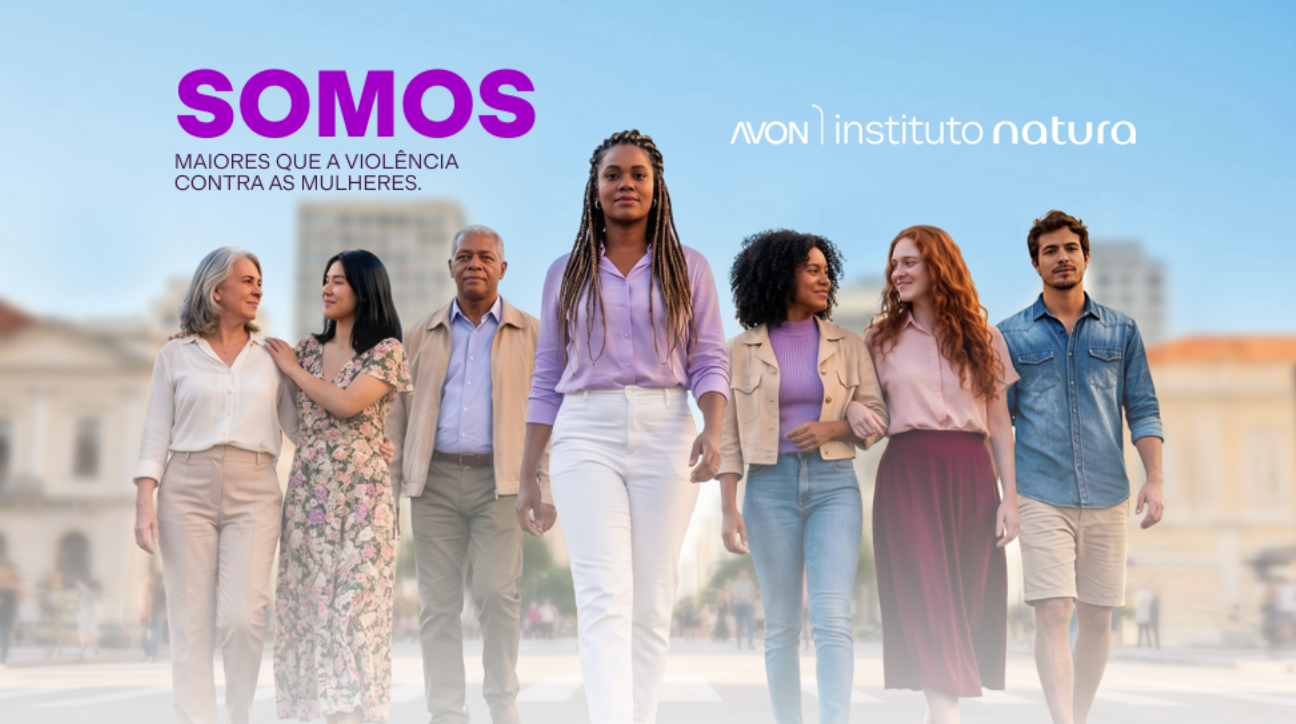
The initiative brings together Avon, Instituto Natura, Instituto Maria da Penha, Senado Federal, Grupo Mulheres do Brasil, Gênero e Número, and NO MORE Brasil in a continuous mobilization to increase the recognition of violence, guide society on how to take action, and strengthen a culture of prevention and protection.
Recognizing violence is the first step to addressing it. Yet, more than 24 million Brazilian women are unable to recognize and name the domestic and family violence they experience, while six out of ten Brazilians state they do not have sufficient information to help a woman facing gender-based violence.
These numbers are drawn, respectively, from the National Survey on Violence Against Women (2025), conducted by DataSenado in partnership with the Observatório da Mulher contra a Violência (Women’s Observatory Against Violence – OMV), whose data is part of the National Map of Gender-Based Violence, and the Awareness Index on Violence Against Women 2025, by Avon and Instituto Natura.
Data such as this helps to gauge the scale of the challenge that gave rise to the Movement for the Lives of Women, launched this Agosto Lilás (Lilac August) by Avon and Instituto Natura alongside Senado Federal, Instituto Maria da Penha, Grupo Mulheres do Brasil, Gênero e Número, and NO MORE Brasil.
Planned to run until 2035, the initiative seeks to address a structural gap in information and awareness that contributes to Brazil maintaining, for the past six years, an average of more than four women killed by femicide per day, according to data from the Justice Ministery.
“Protecting the lives, dignity, and rights of women is an ongoing commitment of the Brazilian State and society as a whole. When different institutions unite their knowledge, mobilization capacity, and public accountability, we take a significant step toward transforming awareness into prevention and protection,” states the President of the Senado Federal, Senator Davi Alcolumbre.
The Movement aims to expand society’s capacity to recognize and name different forms of violence, know how to act responsibly and safely, and recognize this social issue as a collective responsibility, with a special call to action for men to become allies in combating gender-based violence.
“The Movement stems from the solid track record of Instituto Natura and Avon in promoting women’s rights and health in Brazil and Latin America, joining the expertise of organizations specialized in rights advocacy, social mobilization, and community engagement. By investing in the fight against gender-based violence, we are investing in human dignity and the future of our society,” says Cecília Ribeiro, Avon’s Director for Latin America.
We Are Greater Than Violence
The first public mobilization of the Movement is the campaign Somos Maiores que a Violência (We Are Greater Than Violence), created by Avon and Instituto Natura and supported by the organizations comprising the initiative.
The campaign continues the work started in 2025 with Chame pelo Nome (Call it by its Name), which invited society to recognize forms of violence that are often normalized or rendered invisible, such as moral and financial violence. This year, the call to action combines recognition with practical steps, providing guidance on how to support women facing violence.
The dedicated campaign page – www.institutonatura.org/agostolilas – provides information, data, guidelines, and materials for sharing on social media networks, expanding access to knowledge so that more people can recognize, name, and take action against violence against women.
The distance between experiencing and recognizing violence
The National Survey on Violence Against Women of 2025, whose data integrates theNational Map of Gender-Based Violence, helps to gauge the difficulty of recognizing situations of domestic and family violence.
When spontaneously asked if they had suffered violence in the 12 months preceding the survey, only 4% of Brazilian women declared having experienced a situation of domestic or family violence. This percentage corresponds to approximately 3.7 million Brazilian women aged 16 and over. The result changes significantly when concrete situations are presented. When asked about 13 specific experiences of physical, psychological, sexual, moral, and financial violence, 33% reported having experienced at least one of them, equivalent to about 29 million Brazilian women.
The difference between the two results indicates that approximately 24 million Brazilian women only recognized the violence they suffered after being prompted to identify specific experiences of aggression, control, humiliation, or restriction of rights.
Knowledge about protection mechanisms also remains limited. Eight out of ten Brazilian women aged 16 and over state they know little or nothing about the Maria da Penha Law, which marks its 20th anniversary in 2026 as the primary Brazilian legislation for combating domestic and family violence against women, yet remains insufficiently known by a large part of the population it seeks to protect.
“On the eve of the 20th anniversary of the Maria da Penha Law, there are still millions of women experiencing concrete situations of violence without recognizing them as such, while a large part of society does not know how to help. This shows that having a strong law is essential, but not enough. We must ensure that information reaches people, that the different forms of violence are recognized, and that every woman knows she has rights and can rely on a protection network. Confronting violence against women is the responsibility of each and every one of us,” states Maria da Penha, the inspiration behind Federal Law 11.340/06 and founder and honorary president of the Instituto Maria da Penha.
Recognizing the problem does not yet mean knowing how to act
The difficulty in recognizing violence also limits society’s response capacity. The Awareness Index on Violence Against Women is a tool by Avon and Instituto Natura that measures and monitors the population’s perception, knowledge, and attitudes regarding violence against women in Brazil and five other Latin American countries.
“When more than 24 million women only recognize violence after being presented with concrete situations, it becomes evident that we still face an enormous awareness challenge. What is neither recognized nor named can hardly be addressed. The Movement was born to change this reality: we want more and more people to know how to recognize violence, put a name to what is happening, care about it, and act responsibly and safely,” states Maria Slemenson, Superintendent of Instituto Natura Brasil.
In the 2025 survey, 62% of respondents stated they did not have enough information about laws, forms of violence, and reporting and support channels to help a woman facing violence. The results also reveal gaps in knowledge about legislation, available services, and the different forms of domestic and family violence.
“Grupo Mulheres do Brasil believes that the fight against violence against women will only be effective when society as a whole understands that this is not solely the responsibility of the victims or public authorities, but of each one of us. By joining the Movement for the Lives of Women, we reinforce our commitment to mobilizing individuals, companies, and communities to recognize the signs of violence, break the silence, and act responsibly and safely. Abuse thrives on omission, disinterest, and complicity. When society stays informed, takes a stand, and acts, we save lives,” states Alexandra Segantini, CEO of Grupo Mulheres do Brasil.
Visit the Agosto Lilás (Lilac August) campaign page and see how, together, we are greater than violence against women.