Literacy at the right age is fundamental for the development of Latin America, says Jaime Saavedra of the World Bank
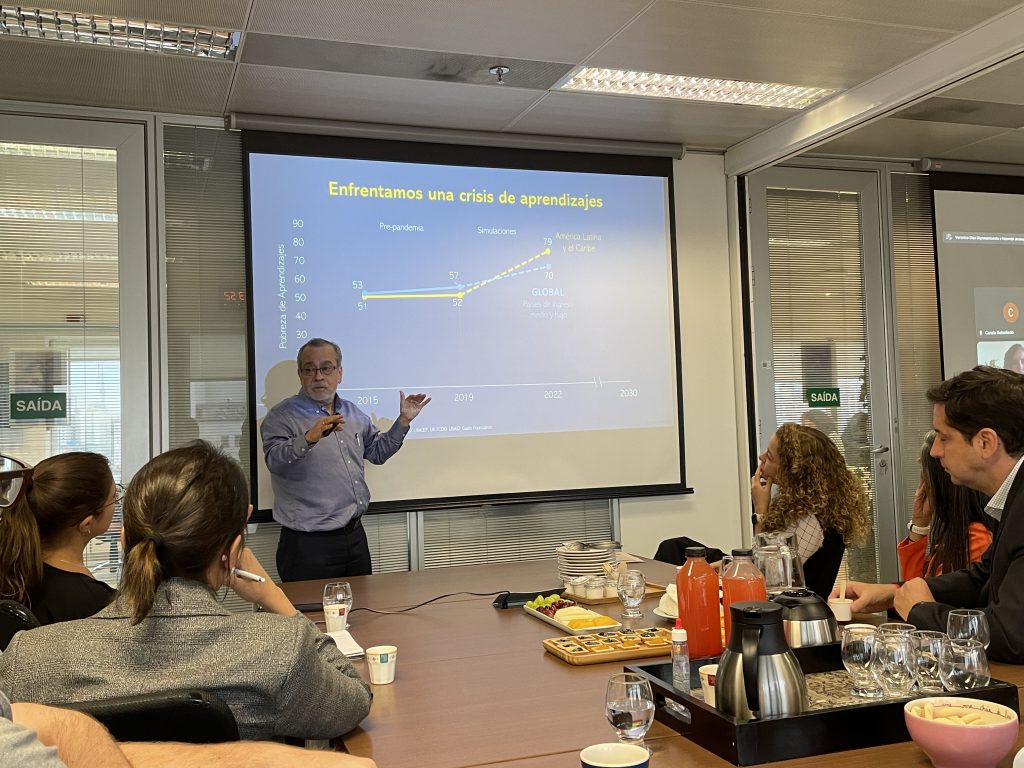
During a visit to Instituto Natura, the World Bank director warns of a learning crisis and highlights the central role of literacy at the appropriate age.
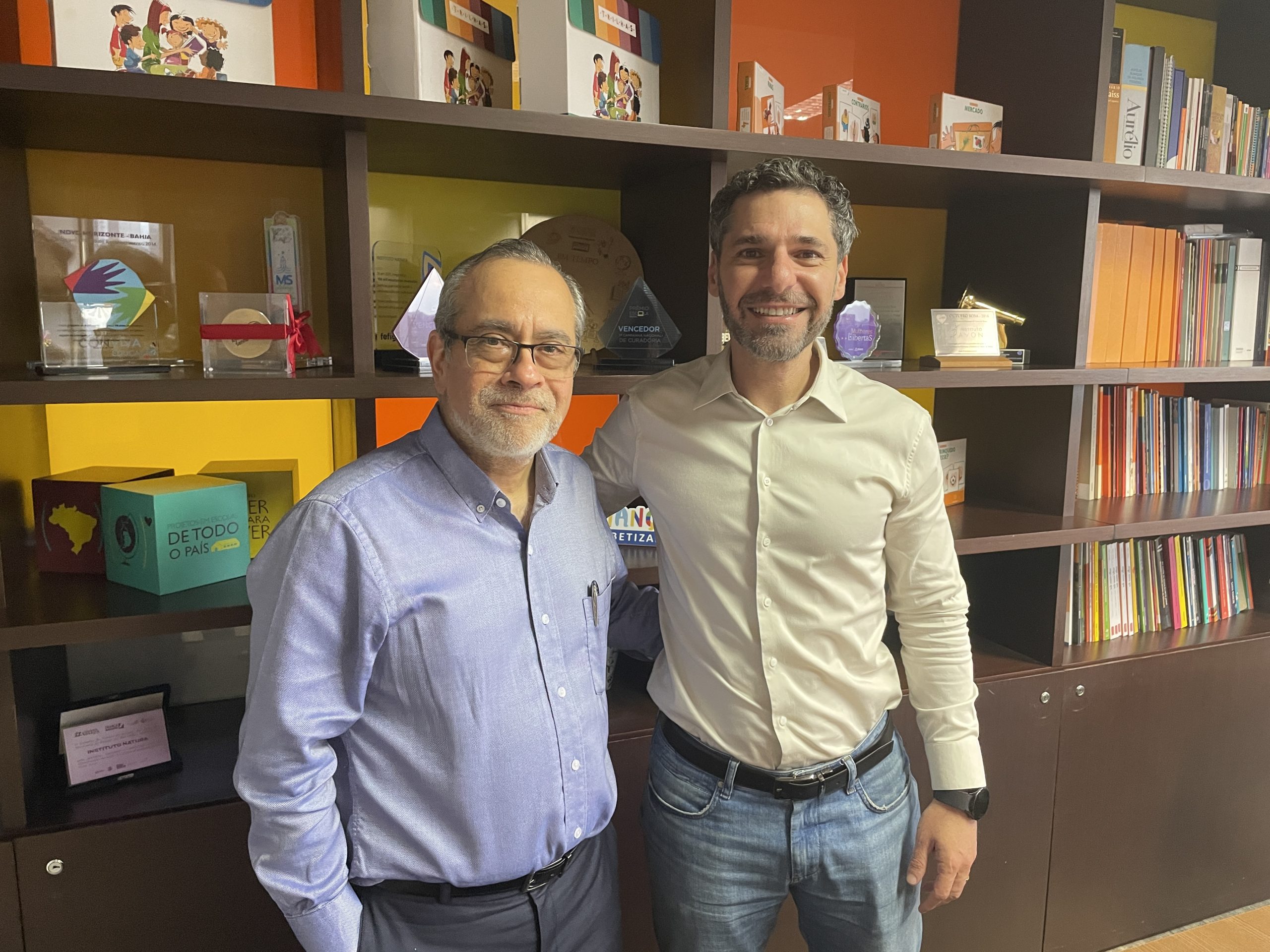
Ensuring that all children learn to read and write at the right age is a fundamental condition for the development of Latin American countries. This was the central theme of the conversation between Jaime Saavedra, Director of Human Development for Latin America and the Caribbean at the World Bank, and leaders from Instituto Natura, during his visit to the organization at the end of January.
When discussing the educational landscape, Saavedra described the region as being marked by a learning crisis. “The fact that not all children have fundamental skills is extremely serious because it compromises all their future possibilities,” he said.
According to him, literacy plays a decisive role in educational trajectories and citizenship training. “If a child learns to read well, this enables them to complete their studies, advance to high school, pursue higher education, and become a citizen capable of contributing to the development of society and their own family,” he said. For Saavedra, investing in fundamental learning, such as reading and math, is absolutely essential for all countries.
The conversation stemmed from a shared understanding: without literacy at the right age, progress in subsequent stages of education tends to be fragile and unequal. Literacy shapes educational trajectories and is directly linked to expanding opportunities, reducing inequalities, and strengthening social and economic development.
Saavedra also emphasized that there are clear ways to improve learning, such as policies aimed at improving classroom conditions and strengthening teaching. According to him, these solutions require continuous investment and the participation of different actors. “This involves the public sector, but also the business sector, civil society organizations, and research centers, which can contribute to strengthening education systems,” he said.
In welcoming Saavedra, Instituto Natura reaffirmed its commitment to literacy at the right age as a strategic agenda for the region. For David Saad, CEO of the Instituto Natura for Latin America, the visit reinforces the importance of turning convergence into action. “We are experiencing a unique moment in Latin America: literacy is no longer seen as an issue restricted to the early years of children’s education in schools and is now recognized as the structural basis for the entire development of the educational system,” he said.
The meeting also highlighted a moment of opportunity for education in Latin America. The centrality of literacy, the accumulation of knowledge, and greater coordination between governments, international organizations, the private sector, and civil society create conditions for consistent progress. In this context, the visit reinforces a clear message: addressing the learning crisis is urgent, possible, and crucial for the future of the region.